

Origin: Tokoname, Aichi Prefecture, Japan
Capacity: 160 ml
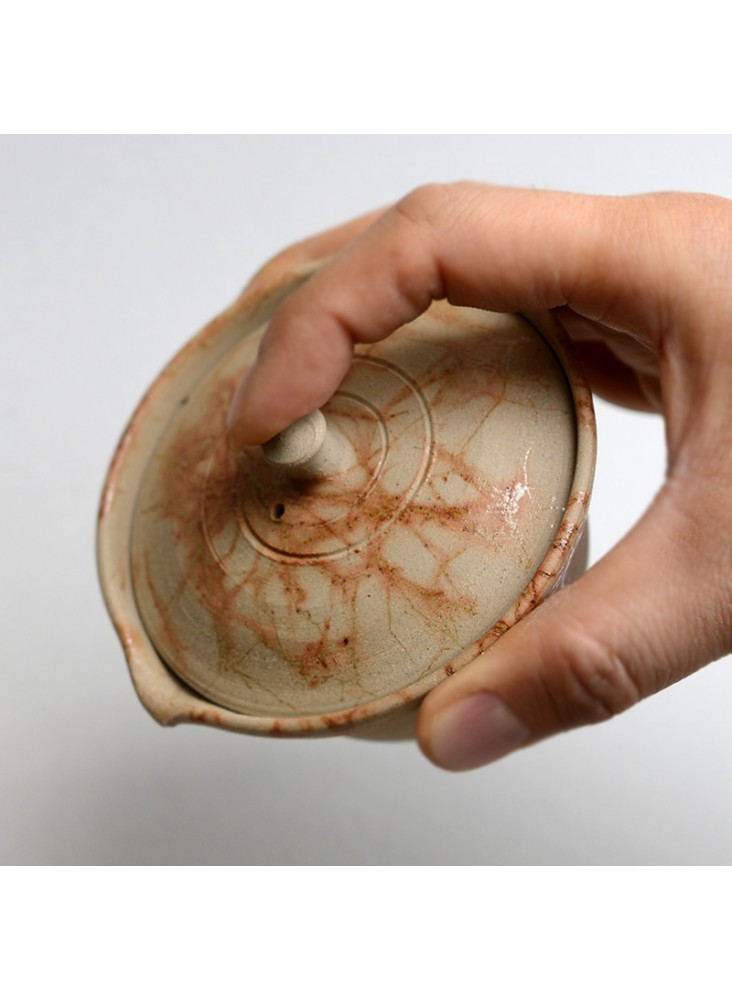
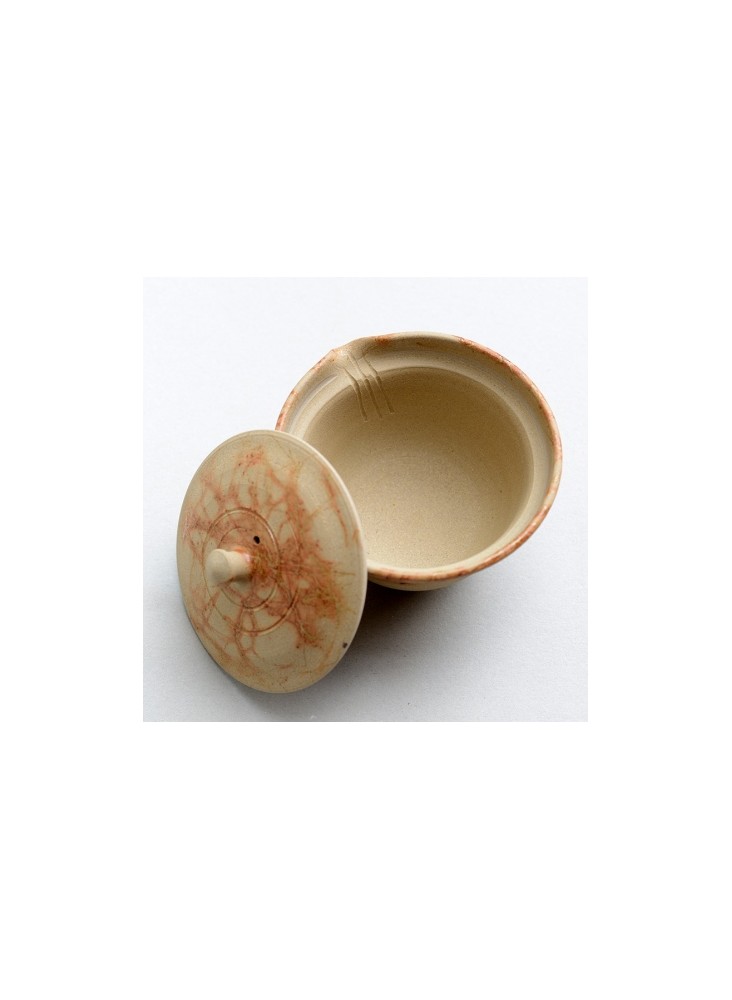
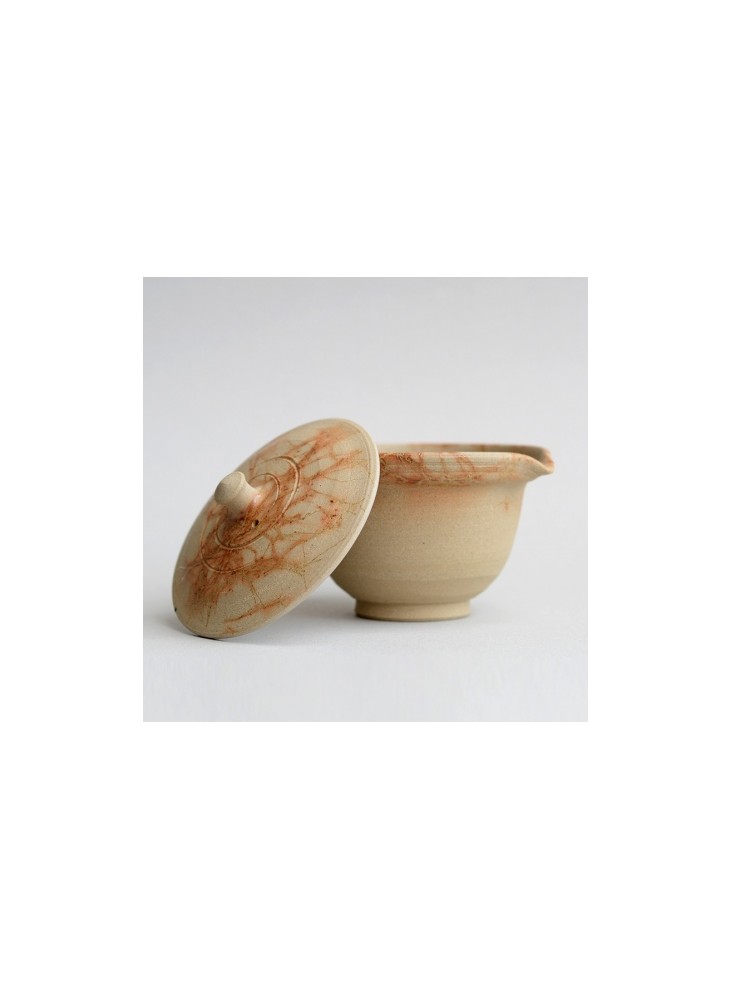
Unglazed, Tokoname Clay, Mogake Style
Tanikawa Jin (real name Hitoshi) was born in 1952 in Tokoname, one of Japan’s most famous ceramic centers. He began his artistic path under the mentorship of the renowned master Mizuno Seisen. Although he is best known for making kyûsu teapots, Jin’s creativity goes far beyond that form – he uses a variety of techniques and creates ceramics in many styles. It is especially interesting that he belongs to a rare group of ceramicists who make clay from raw materials themselves, which gives his works additional authenticity and depth.
Master Jin is best known for his mogake technique – firing ceramics wrapped in algae. The name “mogake” literally means “wrapped in algae,” and during firing, a chemical reaction occurs between the minerals from the algae and the clay, resulting in unique patterns in shades of copper, gold, and dark patina. The surface of the teapot is slightly rough, natural and blends perfectly with the flavors of Japanese green teas such as sencha and gyokura.
Tokoname, located in Aichi Prefecture, is one of the six historic centers of Japanese pottery. It is known as the largest and most important manufacturer of teaware in Japan, often compared to China’s Yixing in popularity and frequency of use. Tokoname clay is known for its strength, fineness, and natural appearance – a balance between porcelain and European earthenware.
Cleaning:
For proper care of high-quality Japanese ceramics, always use soft water during preparation and cleaning. After the last infusion, drain the shiboridashi and rinse it vigorously with water only. Do not scrape or clean the interior. Wipe the outside briefly with a clean cloth and leave it open to dry completely before storing.
- Do not wash in a dishwasher
- Do not place in the oven or microwave
- Do not place on the stove or near an open flame