


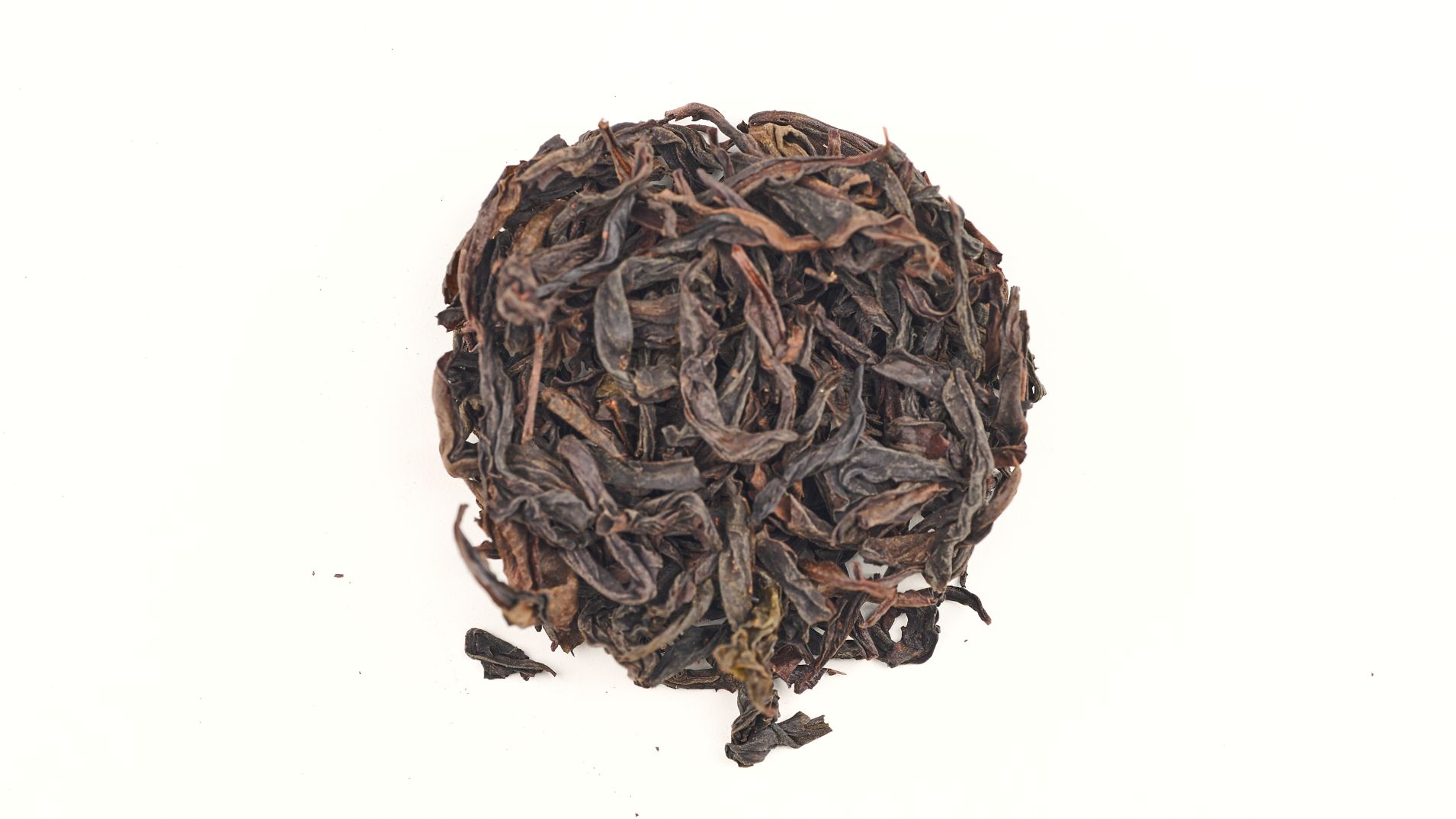


Harvest time: April 16, 2023
Origin: Wuyishan Banyan, Fujian, China
Garden height: 500 m
Cultivar: Qidan
Picking Method: Manual
Qi Dan is one of the two cultivars that claim the name Da Hong Pao, and the other cultivar is Bei Dou.
Qi Dan is a complex Da Hong Pao made from the cultivar of the same name and the original descendant of the parent tree. Medium roast achieves a balanced taste. The floral and fruity profile has toasted, mineral and sweet notes with a taste that lingers in the mouth for a long time.
The name Dahongpao is often used today to refer to yancha (“rock tea”) of a mixture of various teas from this stone area, as it is better known than the name yancha itself. However, the blends sold under the name Da Hong Pao are often unrelated to the most famous variety Qi Dan and Bei Dou which are considered the actual Da Hong Pao cultivar and propagated from cuttings of known mother shrubs.
This tea does not originate from the national park itself, where the most prized teas come from. However, the garden where this tea originates is located in Banyan, an area right on the edge of the park, and still has very pronounced, complex mineral notes.
The shape of dried tea is plump and even, slightly curved, with a dark brown tint. The sweet scent of honey, flowers, fruits and other unique scents should not be missed before preparing tea. Its liquid is deep orange with a strong sweet smell of osmanthus and sweet potatoes.
Its taste is mild and sweet, and you can feel the full minerality of the stone on which it grows. The taste of Qi Dan is fragrant, clear and mild.
They say that if tea is like life, the magic pill from Wuyishan provides full play to the taste of life, bitterness, acidity and sweetness.
Wuyishan teas are in high demand; the pristine and mineral-rich soil in which they grow, as well as the rich artisanal traditions that have developed around their manufacture and consumption have led them to be considered one of the best known in China teas. Due to the aggressive roasting used to make these teas, it is best to let them sit for at least a year before consuming them. These teas can also be aged in dark and dry conditions to enhance their flavor.
Preparation – Yixing clay teapot
- 5 g tea
- 110 ml of water
- temp. 100°C
- Overflow 5: 10s, 10s, 20s, 30s, 50s
Preparation – gaiwan
- 5-6 g of tea
- 120 ml water
- temp. 100°C
- Overflow 5: 5s, 10s, 15s, 25s, 40s


