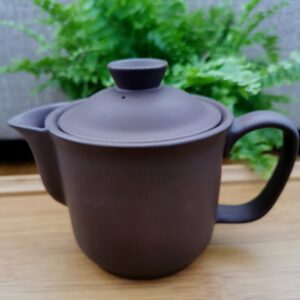
Origin: Tokoname, Aichi Prefecture, Japan
Capacity: 100 ml
Unglazed
The original Japanese handmade flat kettle without a handle from the famous master Hakusan in Tokoname. Ideal for making premium Japanese green tea. Made from natural green clay with a special combination of reduction and oxidation baking for random coloring (Yohen).
The technique of firing with seaweed (Mogake) gives the ceramic a special texture. The lid fits perfectly considering the Rokuro manufacturing technique where parts of the lid and bottom are manually placed on the potter’s wheel and then assembled to fit exactly.
Shiboridashi is a small, palm-sized tea brewing vessel with no handle or strainer on the spout. It is used for teas such as gyokuro, kabusecha, and high-quality sencha that are brewed at lower temperatures – which means that the handleless teapot should be cold enough to hold it. The name shiboridashi translates to “to squeeze,” and refers to how the tea is pushed through a small opening, in order to extract the last drop from the top-quality leaves.
From the oldest of the legendary six ancient ovens (roku koyo), Tokoname has been producing high-quality earthenware since the 12th century. Iron-rich clay deposits are responsible for the characteristic red color, which, together with oxidative roasting, affects the taste of tea. Today’s Tokoname, which houses about 200 kilns, is now the largest ceramic production site. Pure natural clay (shudei) is red in color, rich in iron and has a special influence on the taste and effect of green tea. Unlike other regions, Tokoname still has reserves of its famous natural clay, although these are dwindling.
Suitable for all Japanese teas. Teapots produced by reducing roasting help green tea to have a larger and more balanced body, thus highlighting aromatic substances and generally better taste. Since it is unglazed, it is recommended to use it for a similar type of tea. Made from natural clay, it develops a patina when interacting with each tea, enhancing and intensifying its flavor over time. For this reason, avoid using tap water or bottled water with a high limescale content. Soft water (similar to natural mountain spring water) will not damage the patina.
Shiboridashi should first be heated with water before use so that the clay reacts better with the tea leaves. Only then is tea added. Connoisseurs usually prepare tea much stronger than beginners who are less used to the intense taste of Japanese teas. For best results, fill the water only to the top third.
Cleaning:
For proper care of high-quality Japanese ceramics, always use soft water during preparation and cleaning. After the last infusion, drain the shiboridashi and rinse it vigorously with water only. Do not scrape or clean the interior. Wipe the outside briefly with a clean cloth and leave it open to dry completely before storing.
- Do not wash in a dishwasher
- Do not place in the oven or microwave
- Do not place on the stove or near an open flame