


There are two traditional ways to prepare matcha tea in Japan.
The best-known and most widespread method is usucha. Usucha means “thin tea.”
This is the preparation method most often described on matcha labels: 1–2 grams of powder are added to 100 ml of water at 50–70°C and quickly whisked in an M or W motion until a rich foam forms. The resulting beverage is frothy and sweet, with a rich umami flavor.
Koicha is prepared in a completely different way. First, only high-quality matcha is used for koicha, made from leaves of tea plants more than 30 years old. It is the method selected by most Japanese tea ceremony schools.
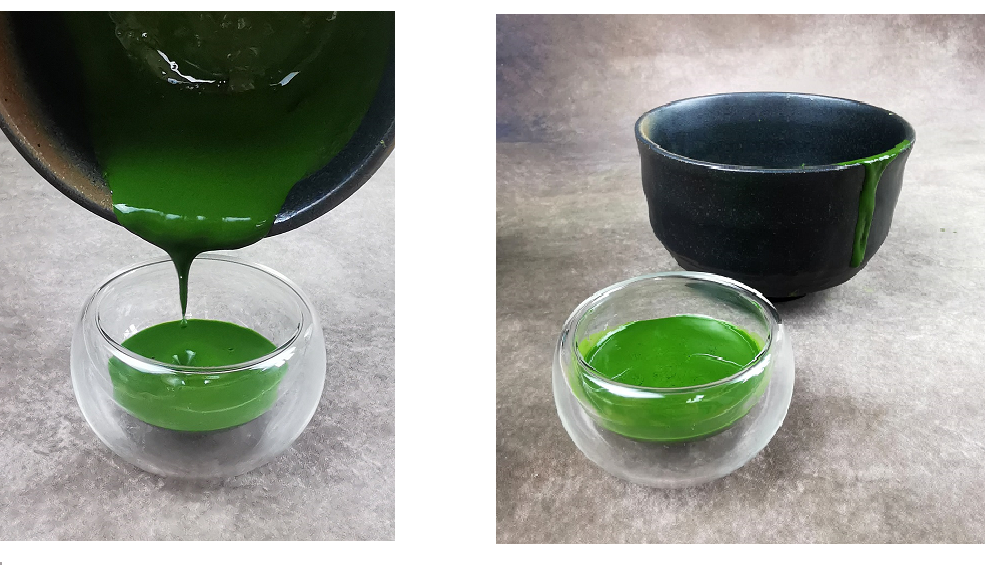
Koicha means “thick tea” and is a smooth, concentrated, syrupy matcha preparation.
The simplest way to explain the difference between usucha and koicha is that koicha uses twice the amount of matcha and half the amount of water compared with the most common preparation method, usucha.
Although 3.75 to 4 grams of matcha powder are generally used to prepare koicha, the water ratio usually depends on the source or tea school followed by the drinker. The amount of water added to the powder may range from 20 ml to 50 ml. Koicha is not whisked in the same way as usucha. Instead, it is slowly stirred in circles until a thick, creamy, lump-free paste is formed. Care should be taken not to spread it too far up the sides of the bowl because its texture will cause it to stick.
It is very important to use high-quality matcha , recognizable by its vivid green color and pleasant aroma. Low-quality matcha produces a very bitter and astringent beverage that is neither pleasant to drink nor rich in the nutrients and antioxidants found in fresh, high-quality matcha.
A regular matcha whisk can be used to prepare koicha, although a special koicha whisk also exists. It has fewer tines—48—which are thicker and stronger because koicha has a much denser, firmer texture.
It is important to note that something sweet is offered during the koicha-drinking ceremony. The sweet food softens koicha’s astringency without adding sugar to the tea. Serving sweets such as mochi or wagashi is a long-standing ceremony tradition in which the host gives something to the guest to strengthen their bond.
Becoming a master of the true Japanese tea ceremony requires years of dedicated instruction, practice, and study in specific tea schools. Nevertheless, you certainly can—and should—prepare usucha and koicha at home for personal enjoyment and to share with friends and family. Culturally, this is not equivalent to performing cha-no-yu, the traditional Japanese tea ceremony , but we believe you will enjoy every moment spent with matcha, whether you experiment with usucha or koicha.
