


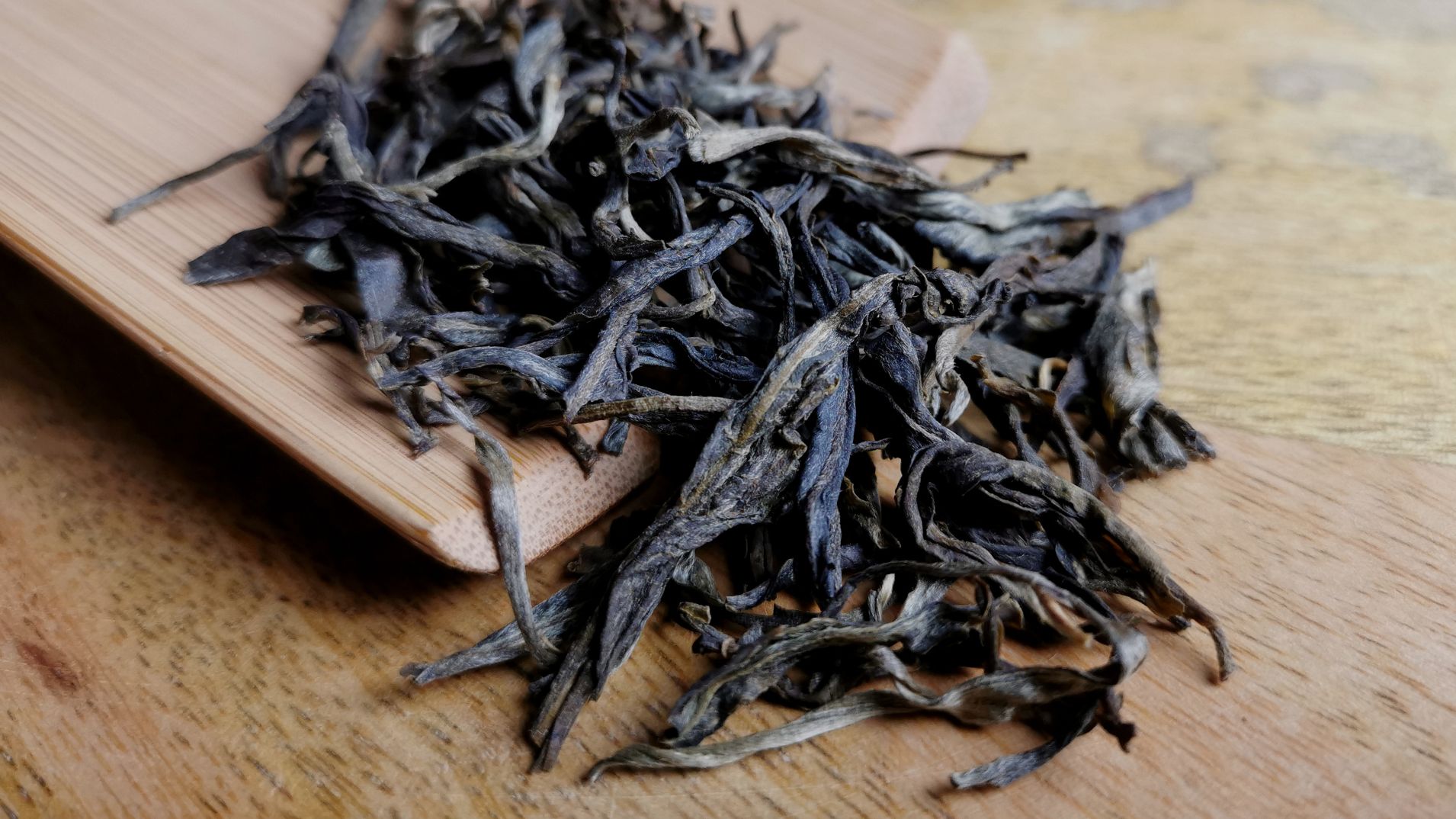


Harvest time: April and September 2022
Origin: Ming Feng Shan, Lincang, Yunnan, China
Garden height: 2050-2100 m
Cultivar: Yunnan Big Leaf Tea Old Tree (140-400 yrs)
Picking Method: Manual
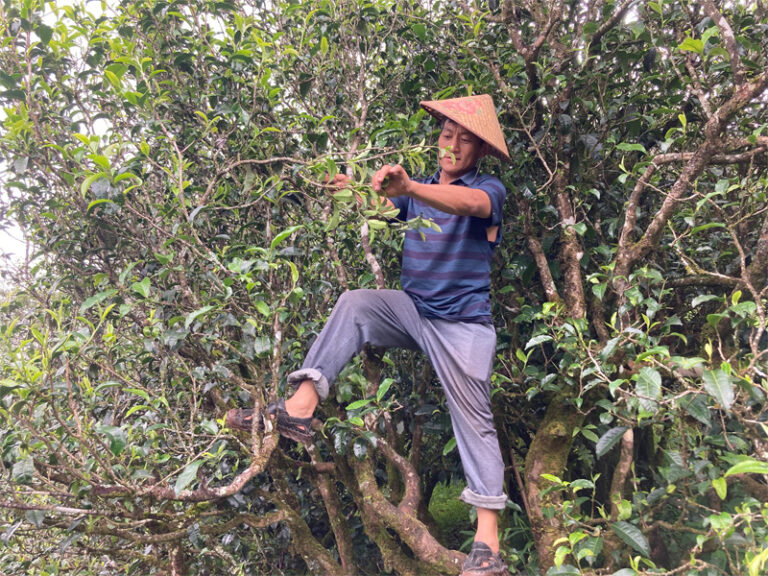
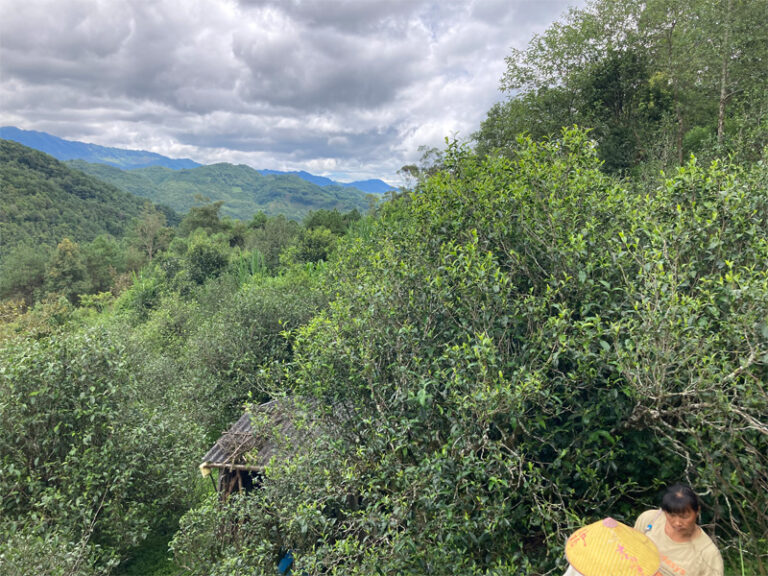
The tea garden is located in Ming Feng Shan in Yongde County in southwestern Yunnan. The reason why this raw material is used is because of the old tea trees ranging from 150 to 400 years that grow in this garden and the local farmers who are very skilled and reliable in harvesting and processing these leaves. Namely, these trees must be carefully harvested so that they continue to thrive. The altitude of the tea garden is very high and reaches 2050-2100m which is a rarity for the gardens of Yunnan.
The natural cultivation of old tea trees and the very high altitude ensure a very deep taste of tea that is pure, complex with a hint of plum flavor.
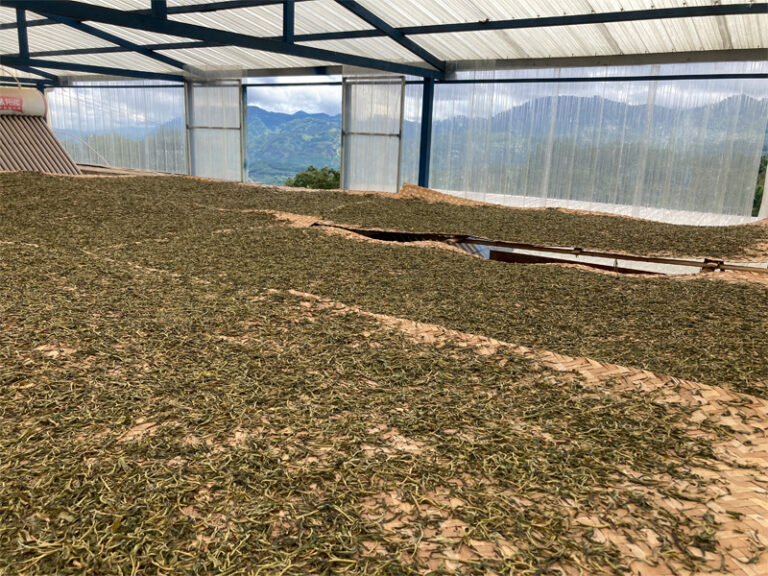
In the broader context of tea processing, the term mao cha refers to an unfinished stage; wilted, partially fried or otherwise incompletely dried and finished. Although this unfinished tea can be tasted to assess flavor development or sold to third-party roasters, it is almost never offered for sale to consumers, as it is not stored for storage. However, in the unusual spectrum of pu-erha production, mao cha also includes teas that have been dried or pressed but have not yet been aged.
In recent years, pu-erh manufacturers have found a market for sheng pu-erh teas that have not yet been aged. With leaves that are still green in color, these teas are called mao cha or unfinished tea, despite the fact that they are completely dried. Instead of being stored for ten years before finding a buyer, these teas are now sold to the consumer market as-is. While some pu-erh lovers appreciate these green versions for their existing flavor, others might buy them as an investment, with the intention of preserving them for years while the tea ages and gains value as it ages.
Before aging, they resemble summer harvest green tea, but usually contain more mature leaves that contribute to a sharper flavor. High-quality specimens are harvested from older tea trees than standard green teas, which adds added flavor complexity. By using short, hot steeps, green pu-erh can yield more infusions than traditional green teas, with greater variation in flavor over several brews.
Connoisseurs, both in China and abroad, could also buy unfinished mao cha sheets to control the aging process themselves.
Pu-erh maocha in the form of leaves in bulk ripens quite differently than when made in compressed form. Heartily aged mao cha gets a unique flavor profile from the leaves. It’s so good that we think it’s worthy of its subcategory
Preparation – kettle:
• 4 g tea (2 large spoons)
• 200 ml of water
• temp. 85-90°C
• Overflows 4-5: (10s and pour out the water), 1 min, 1.5 min, 2 min, 2.5 min, 3 min
Preparation – gaiwan:
• 5 g tea
• 110 ml of water
• temp. 85-90°C
• Overflow 8: (10s and pour water), 15s, 20s, 25s, 30s, 40s, 50s, 60s, 80s
