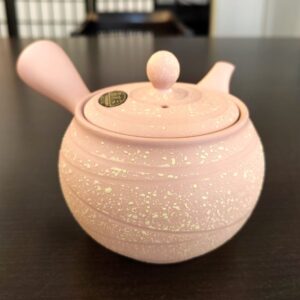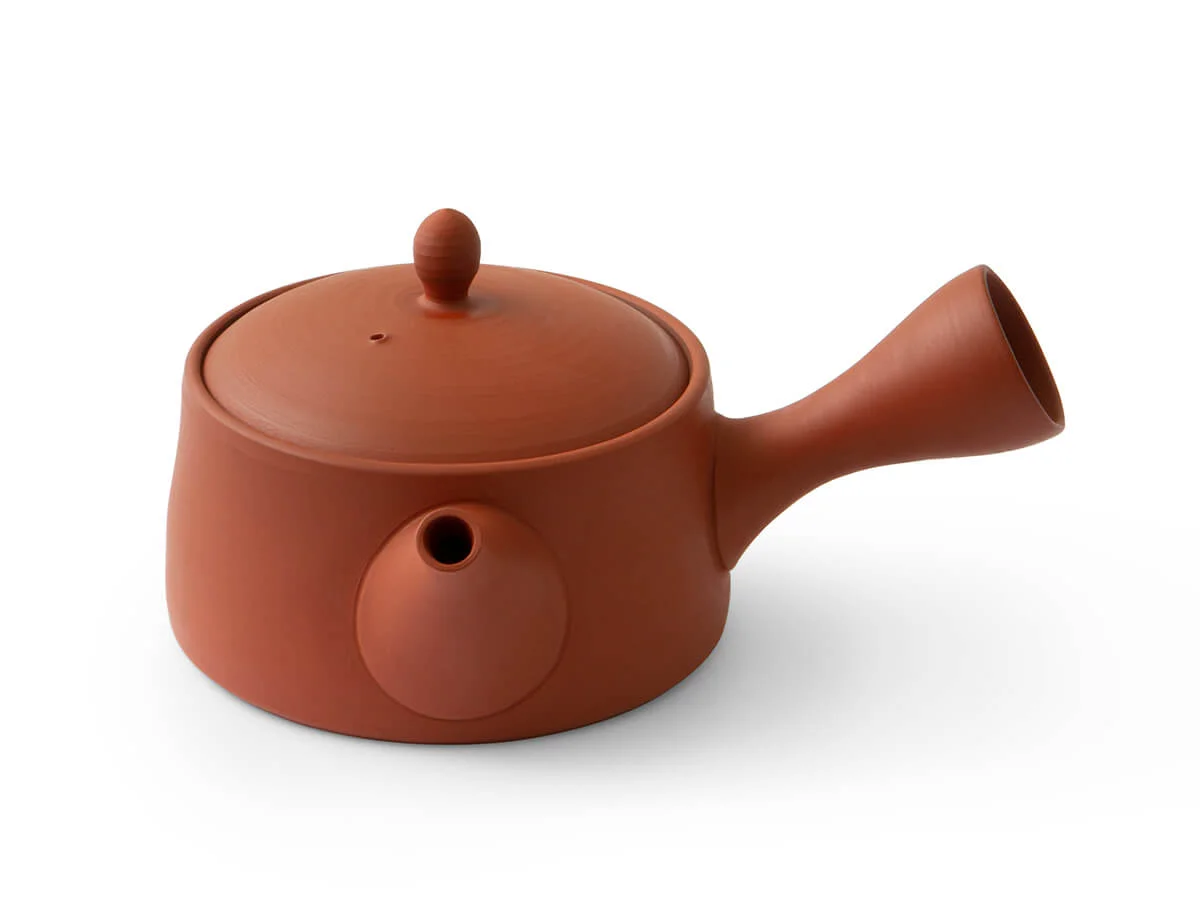
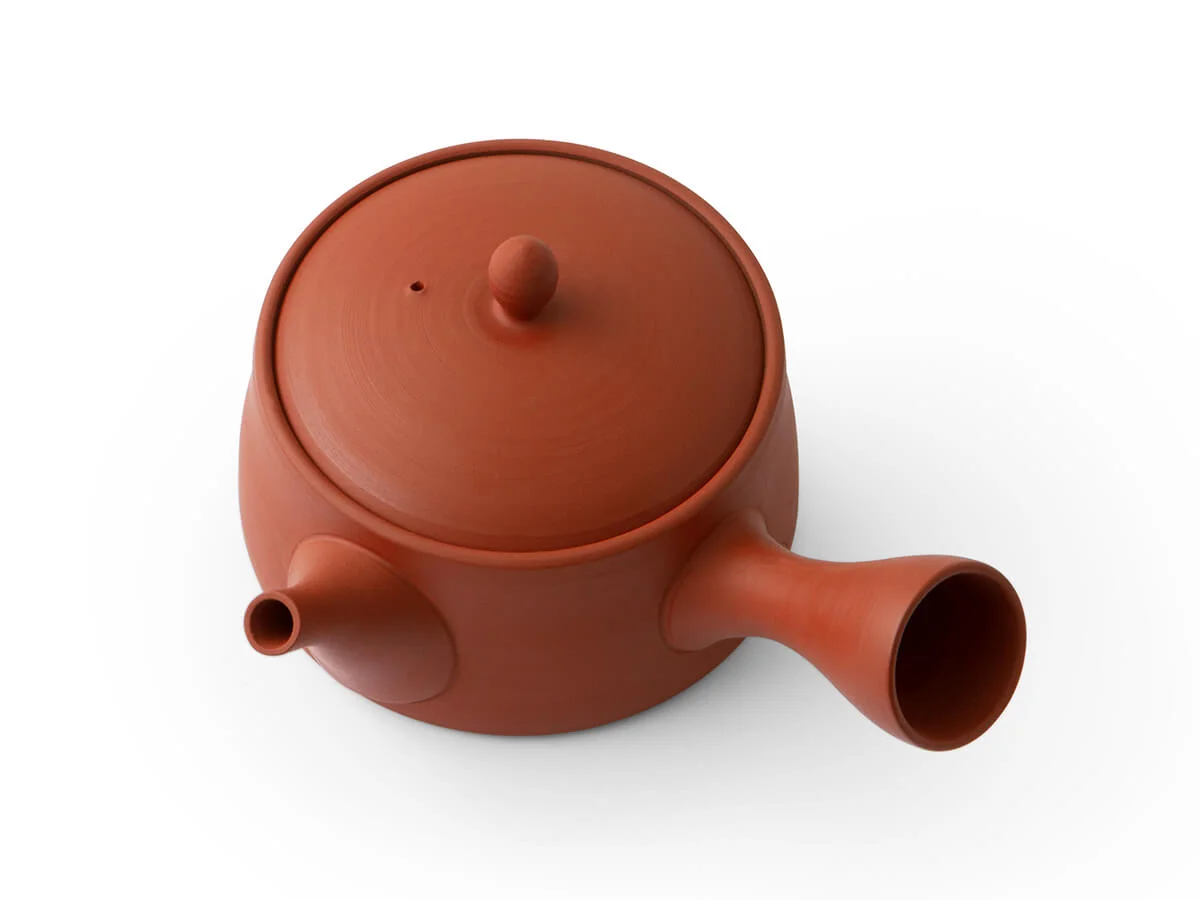
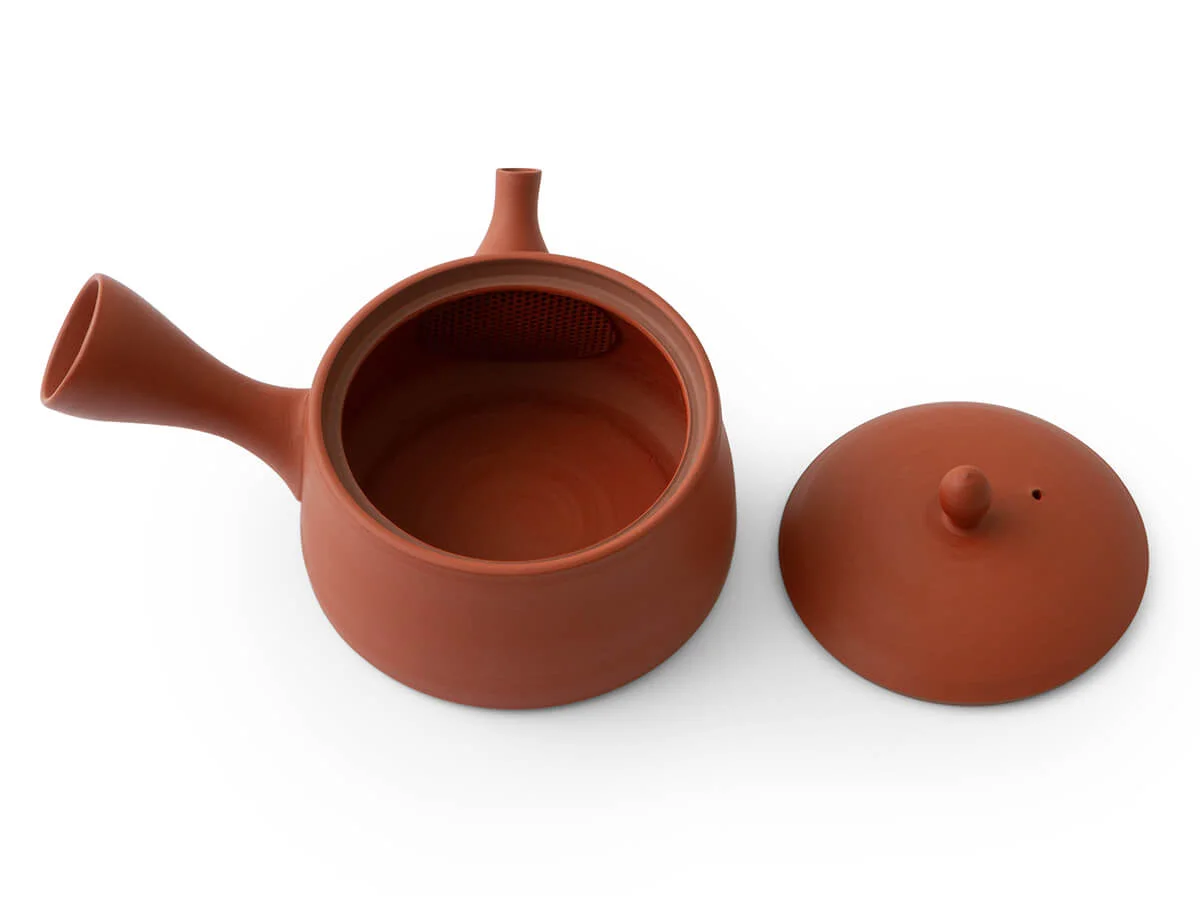

Origin: Tokoname, Aichi Prefecture, Japan
Volume: 160 ml
Unglazed
Master Gyokko has won many awards for his delicate, delicate craftsmanship: Japan Sencha Art, Choza-Sho Pottery Exhibition, Encourage Prize, Award of Excellent Craftsmen and others.
His works show beautiful shapes, very high perfection and many beautiful details. He hand-shaped all his teapots on a potter’s wheel. In addition, the art of firing ceramics stands out. Gyokko perfectly masters the technique of reducing roasting, with which he produces his unusual, iridescent shades. Thus, in some of his works, he achieves extremely vivid coloristic games and color transitions, while in others he has a homogeneity of colors exemplary for uniques. The clay with a high iron content needed for this is a completely natural product: shudei, a red clay with a high iron content. Gyokko has integrated a ceramic strainer with more than 400 hand-drilled holes, which tea connoisseurs appreciate even more than stainless steel strainers.
The advantage of natural clay
The difference between natural clay and mixed clay is that in natural clay, iron is in crystallized form. In clay to which iron has been artificially added, iron is pre-ground. This process results in a different, uneven, and more extensive surface, and the melting point is usually much lower than natural iron. And this means that clay or clay pots, to which iron has been added, must be baked at much lower temperatures – around 600-800 degrees – while Japanese teapots made of natural clay can be baked up to 1200 degrees. This not only increases the strength of the final product, but also leads to the transformation of the material under the influence of temperature. Most of today’s clay teapots – especially the mass-produced ones – from China, but also from Japan, are made of artificially mixed clay.
Suitable for all Japanese teas. Teapots produced by reducing roasting help green tea to have a larger and more balanced body, thus highlighting aromatic substances and generally better taste. Since it is unglazed, it is recommended to use it for a similar type of tea. Made from natural clay, it develops a patina when interacting with each tea, enhancing and intensifying its flavor over time. For this reason, avoid using tap water or bottled water with a high limescale content. Soft water (similar to natural mountain spring water) will not damage the patina.
Cleaning:
For proper care of high-quality Japanese ceramics, always use soft water during preparation and cleaning. After the last infusion, empty the kettle and rinse it vigorously only with water. Do not scrape or clean the interior. Wipe the outside briefly with a clean cloth and leave it open to dry completely before storing.
- Do not wash in a dishwasher
- Do not place in the oven or microwave
- Do not place on the stove or near an open flame