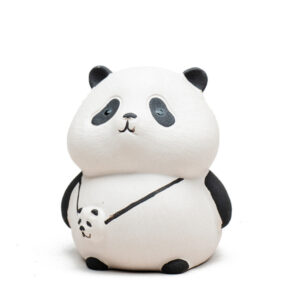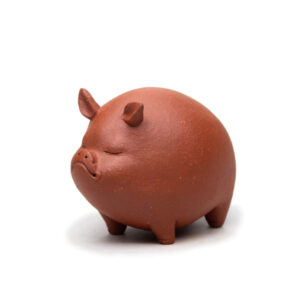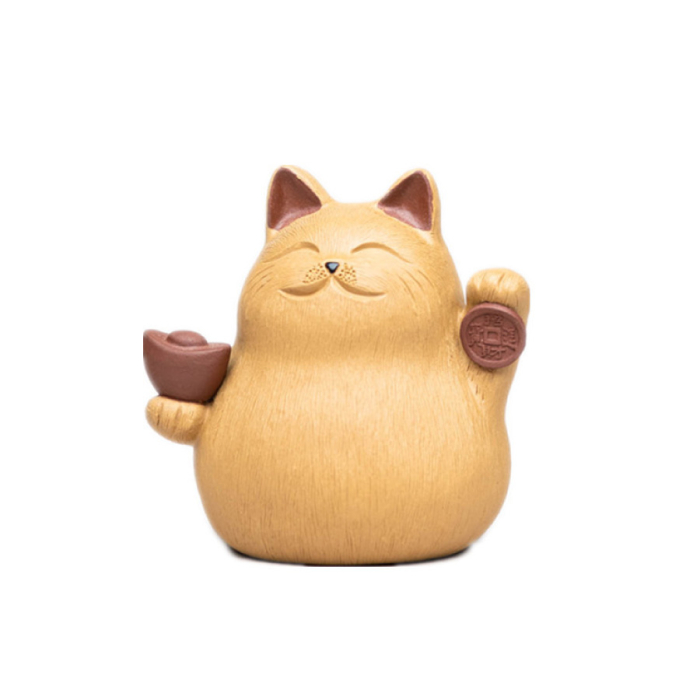


Material: Duan Ni
Origin: Yixing, Jiangsu Province, China
Dimensions: 7.5 cm x 8 cm
Note: There may be some differences, as it is handmade and manually measured.
The Lucky Cat is a common Japanese figurine that is often believed to bring good luck to its owner. This lucky pet is made of Duan Ni clay. Exquisite craftsmanship has achieved a lively look. With a special technique “la mao”, fur is expressed. In the hands of the cat there is also a coin that has a beautiful symbolism of attracting prosperity and wealth. This is a beautiful little decoration that can be used anywhere.
An old Chinese saying says that “gentle fire creates sweet malt”. This also applies to pouring tea over pets, which can “educate” them. It is necessary to pour tea over them during the ceremony to feed them. As the color matures more and more with time and more overflows, pets become a permanent part of the Gongfu set.
Any liquid from the ceremony can be used for pouring, i.e. feeding the pet: the water used to originally heat the cups, the liquid from the first rinsing of the leaves, or the remains of tea from each soaking. It is necessary to evenly pour the liquid over the figurine. Uneven application will result in a spotted appearance. After it dries, it can be touched freely.
A tea pet (tea pet) is a small ceramic figurine that tea lovers hold for good luck on a coffee table during a tea ceremony. Some tea masters believe that when we adopt a tea pet, it has no soul. Pouring tea (which has a soul), we also give a soul to our little pet.
The pets are made from zish or Yixing clay from a region near Yixing, Jiangsu Province, China. Similar to Yixing teapots made from the same clay, tea pets are unglazed and are mostly monochromatic with a rough surface. It is usually placed on the tea table and poured during the tea ceremony. Since the figurines are not glazed, they absorb some of the tea, which results in them changing color over time and absorbing the smell of tea. The pores of the clay are filled with tea residue, and additional layers of tea result in the formation of shine on the surface.
Clay tea pets date back to Yixing during the Yuan Dynasty, 13th-century China. Yixing is famous for its clay (zisha) and tea utensils. Similar to zisha teapots, small figurines made of yixing clay are porous and unglazed and absorb liquid very well.
The maintenance of the figurines is similar to that of the Yixing clay teapot. Residues of tea or water for rinsing the leaves are usually poured over the teapot, and the surface is wiped with a tea brush to absorb the tea more easily and evenly. The figurines are just rinsed with water without the use of cleaning agents to ensure a progressive increase in the color of the tea. After prolonged maintenance, over months or years, our pet will absorb the tea, and its appearance will become brighter.