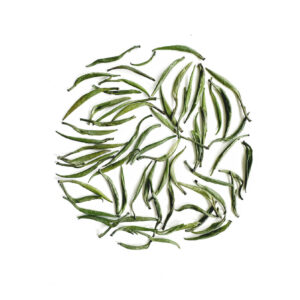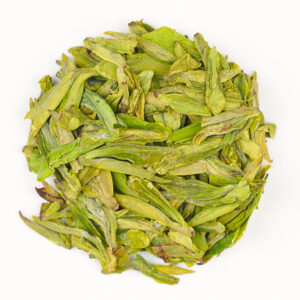


Harvest time: 12/04/2026, before rains
Origin: Houkeng village, Xinming district, Huangshan city, Anhui Province, China
Garden height: 710 m
Cultivar: Shidashuzhong
Picking Method: Manual
This ancient green tea dates back to the Tang Dynasty in the former Taiping District.
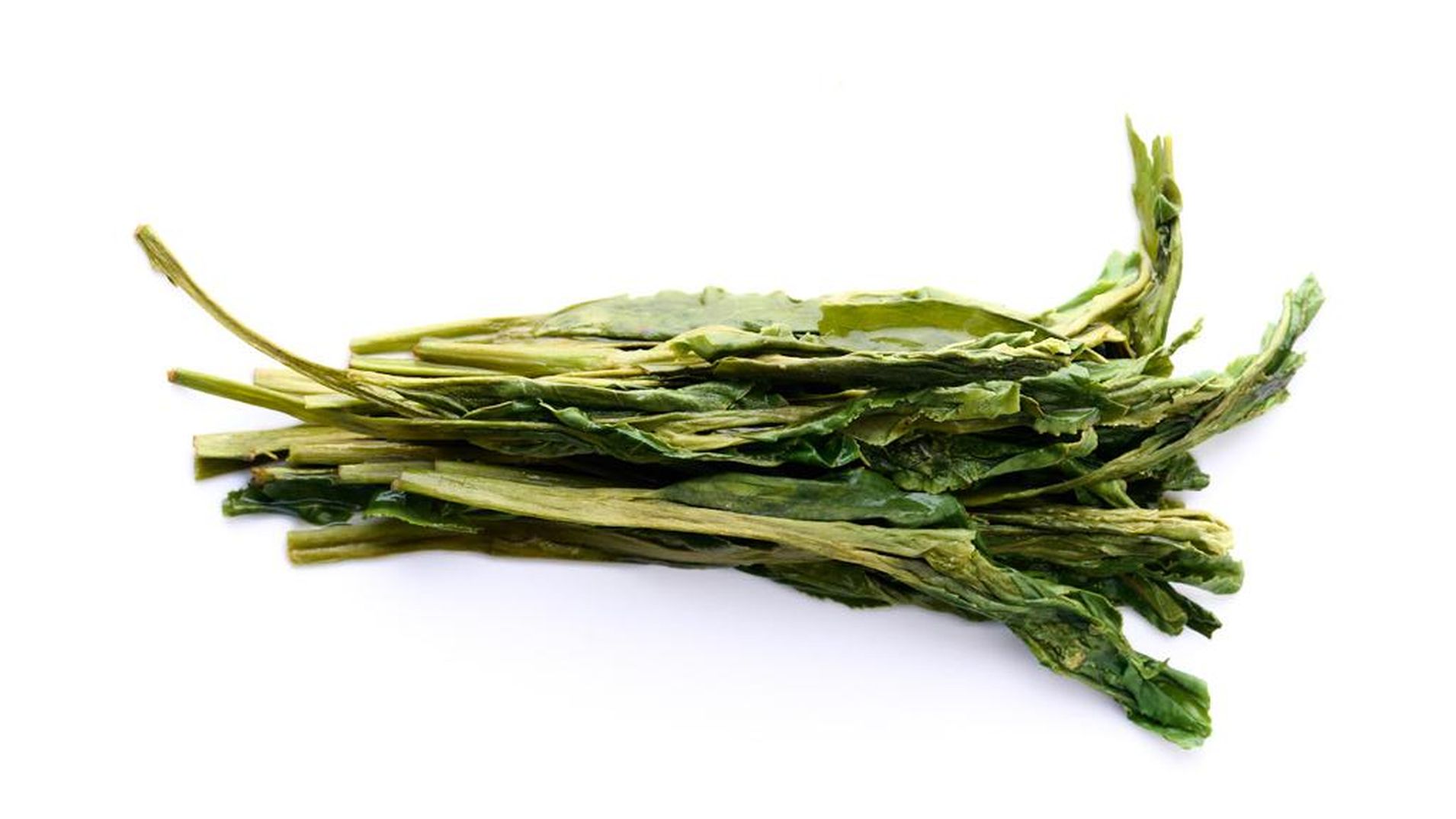
Tai Ping Hou Kui is one of the ten most famous Chinese teas. It is one of the few Chinese green teas that is made from larger, ripe leaves, instead of very tender buds and young tea leaves. It is manufactured in Taiping, Anhui Province. (In 1983, Taiping County was changed to its current name Huangshan County).
 Tai Ping Hou Kui was first produced around 1900. At that time, tea was in high demand in nearby cities of Taiping County, such as Shanghai, Nanjing, and Yangzhou, and customers demanded high-quality green tea. Tea grower Wang Kui Cheng lived on Monkey Hill (Hou Gang) in Taiping. He was very smart and experienced in tea processing. He decided to use high-quality material and produce a series of premium green tea with refined processing to meet the demand of his customers from large cities. The highest tea garden on Monkey Hill is called Phoenix Peak (Feng Huang Jian) with an altitude of 750 m.
In 1915. Tai Ping Hou Kui was awarded a Gold Award at the World Exhibition in Panama for its outstanding quality.
This is one of the most precious Chinese teas. It is often presented by Chinese leaders as a national gift to presidents of foreign countries.
Although Tai Ping Hou Kui was famous in China and abroad, its production remained very low compared to other famous Chinese teas. The records show the annual production in these years:
- – 500 kg
- – 95 kg (the Chinese Civil War of 1945-1949 severely affected production)
- – 500 kg
- – 500 kg
- – 1,000 kg
- – 1,500 kg
- – 12,600 kg (this year, the production of Tai Ping Hou Kui has been expanded to the entire Taiping district, from the previous ones only Hou Gang and Hou Keng Village).
Even now, the production of this tea is still less than the other ten best and most famous Chinese teas. There are three factors that limit the production of this tea.
- Tea material must be exclusively from Shidacha cultivars. This variety of tea is mainly planted in the Taiping area. Few other Chinese places plant this variety.
- Only in the Taiping area can tea be gentle enough to be processed when the tea shoot grows to one bud and three leaves. This means that the tea sprout retains its tenderness hereEven when he grows up.
- So far, only farmers in Taiping have mastered the special way of processing Tai Ping Hou Kui.
After the tea is roasted, one twig at a time is placed on a wooden plate. Then it is manually and gently pressed with a light cotton cloth.


Due to its high price, fake Tai Ping Hou Kui can often be found on the market. It is most easily recognizable by its appearance, which is very thin and straight machine-pressed. The real Tai Ping Hou Kui is made by hand and is thicker than very thin paper (as opposed to fake) and has an imprint of the fabric with which it was covered and pressed during production.
The tea has a pleasant fruity aroma with a slight floral aftertaste. It can be cooked in gaiwan, patiently waiting for the dry leaves to warm up and soften, gently falling to the bottom of the teapot. Also, it can be poured directly into a long glass glass and slowly sip the clear and refreshing liquid while the leaves continue the infusion. When 2/3 of the tea is drunk, add more water and repeat the procedure 3-4 times.
Preparation – kettle:
• 3 g of tea
• 200 ml of water
• temp. 75-80°C
• 3 pour-overs: 2 min, 2.5 min, 3 min
Preparation – gaiwan:
• 3 g of tea
• 100 ml of water
• temp. 75-80°C
• Overflow 4: 30s, 40s, 50s, 100s