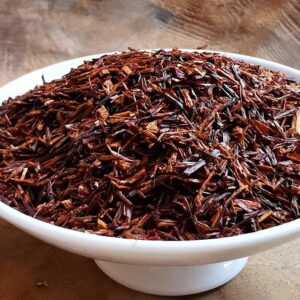

Rooibos is a plant native to South Africa. It is harvested and processed in a similar way to the tea plant Camillia sinensis. Although it is dried after harvest and a very tasty drink is prepared from it, it does not contain theine and does not belong to teas. Nevertheless, it has earned the name “African red tea” or “red bush tea” because the preparation with hot water produces a delicious red-brown herbal drink.
It is often drunk as an alternative to coffee or tea because it does not contain theine. Naturally sweet with added caramel, especially creamy in taste and rich in antioxidants, it quickly became a favorite of the younger population. As it does not contain theine, it is an excellent drink even in the evening.
Once harvested, the bushy rooibos plant is cut by hand and the stems and leaves are tied in bundles. The bundles are sorted and then cut or poured to encourage oxidation. Oxidation, or exposure to oxygen, is what brings out the essential oils of the plant and helps the leaves develop their rich color and flavor. The more oxidized the rooibos, the redder, sweeter and richer in flavor it becomes. This method of processing produces red rooibos. Less oxidized rooibos is immediately steamed and dried instead of oxidizing, thus remaining slightly green in color and retaining its grassy taste. This less oxidized version is called green rooibos.
Preparation: Pour 4-5 grams with 200-250 ml of water at a temperature of 95 °C. Leave for 7-10 minutes and strain.