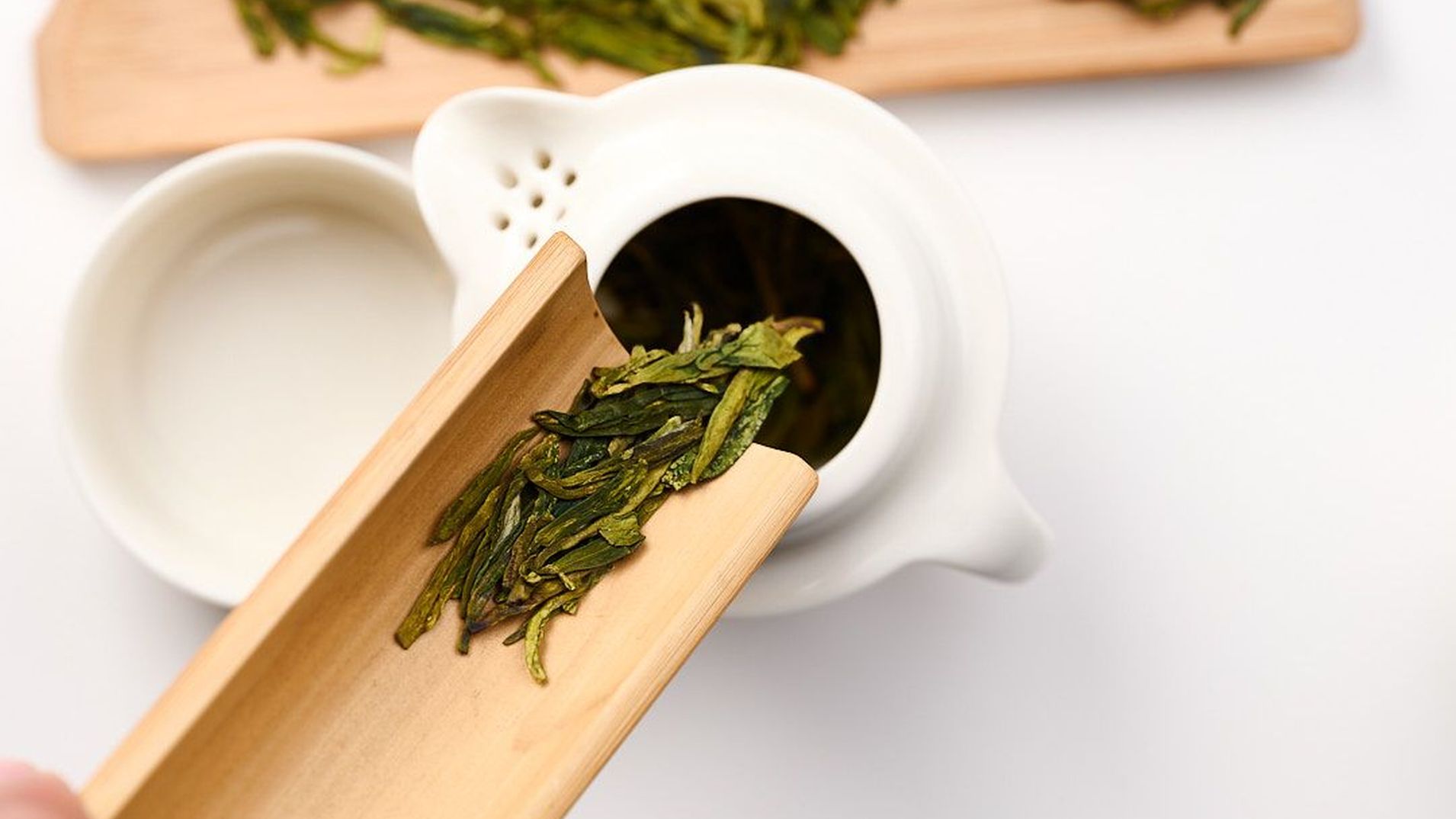
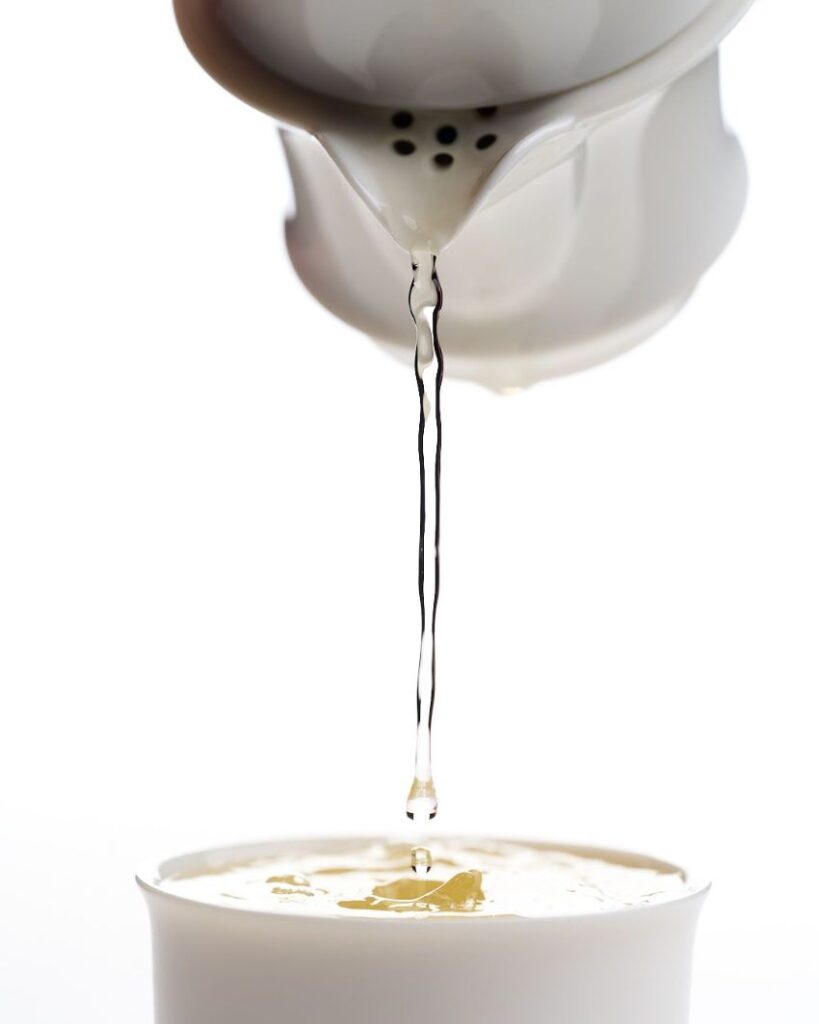
Every tea lover knows Long Jing, one of the ten finest and best-known teas in China. However, few people know about the original indigenous Quntizhong cultivar, because Cultivar No. 43 is now grown and used for most Long Jing production.
Xihu Longjing, a famous type of green tea grown only in the West Lake area of Hangzhou, is often considered China’s national tea. It also has the honor of having been selected by Emperor Qianlong as a tribute tea of the Qing Dynasty (1644–1911). Xihu Longjing, also known as Dragon Well tea, contains an abundance of vitamin C and amino acids.
The famous Xihu Longjing has a long history. More than 1,200 years ago, the renowned tea sage Lu Yu wrote the treatise The Classic of Tea,in which Xihu Longjing was documented.Xihu Longjing is not only the name of a tea but also the name of a temple and a spring. Because the water of Longjing Spring is clear and sweet, Buddhist monks planted tea trees there and built Longjing Temple nearby. This is how the tea received the name Longjing.
Cultivar No. 43began to be cultivated intensively in 1990 for mass production because of its high yield and greater resistance to disease. Interestingly, the leaves of this younger cultivar are more attractive and uniform than the plain, uneven leaves of the old indigenous cultivar. Because of its faster growth, Cultivar No. 43 is also harvested earlier, two to three weeks before the original cultivar. This is falsely advertised as indicating higher quality, artificially and dramatically increasing its price.
On the other hand, theold Quntizhong varietygrows more slowly and is harvested later, usually in late March. The Chinese government determines the exact starting date for its harvest depending on weather conditions.
Although tea connoisseurs consider the old Quntizhong variety a moreauthenticLong Jing experience than tea produced from the younger Cultivar No. 43, it should be emphasized that Cultivar No. 43 can also produce high-quality tea when it comes from a reliable producer, a good harvest, and expert processing.
The difference between these two Long Jing cultivars can most easily becompared with wine. A €25 bottle of wine would represent Cultivar No. 43, while an €80 bottle would represent the old Quntizhong cultivar. Although the less expensive bottle may be rated as a very good wine, the more expensive bottle will have additional depth and complexity of aroma that
the less expensive bottle lacks.Tea connoisseurs saythat only tea from the central Long Jing growing area around the scenic West Lakeregion can be calledauthentic Long Jing . Long Jing from Shifeng and Meijiawu is particularly sought after and commands very high prices.