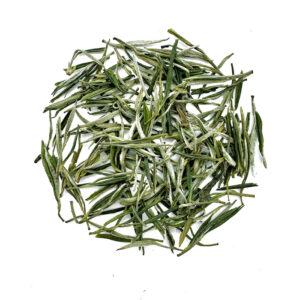
Harvest time: April 21, 2025
Origin: Qimen, Anhui, China
Garden height: 600 m
Cultivar: Xiao Ye Zhong
Picking Method: Manual
Keemun is produced exclusively in Qimen, Huangshan. This black tea is also known as ‘Qimen Hongcha’ and the first part refers to its origin. The second part of ‘Hongcha’ means ‘red tea’ in Chinese, also known as black tea in the West. In China, this type of tea is called red tea based on the color of the tea liqueur instead of the appearance of dry leaves.
Keemun black tea is also often known as “Keemun Congou”. The term ‘Congou’ is also a colonial-era term, derived from the Chinese word ‘Kungfu’ or ‘Gongfu’. The reason why Congou is often part of the name is that the original Keemun tea is great for performing a kungfu-style Chinese tea ceremony.
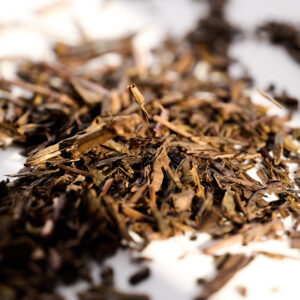
This original Keemun (Qi Men Hong) of small leaves has a beautiful amber-red liquid with a rich and smooth woody taste of brown sugar, caramel, tobacco.
Compared to Lapsang Souchong, this Qimen tea has a relatively short history, as it was first harvested in 1975. Yu Gan Chen, a former officer from Wuyishan, secretly brought the know-how to produce fine black tea to his hometown of Qimen. Because Wuyishan (in Fujian) was very successful in producing the excellent Lapsang Souchong, the first black tea in history, Yu Gan Chen believed that Anhui green tea masters could produce black tea of proper quality. Given that Qimen has a favorable climate, as well as skilled farmers who can harvest high-quality leaves for the local Huangshan Maofeng green tea, it was crucial to master the fermentation process of Lapsang Souchong from Fujian Province.
This adventure of Yu Gan Chen turned out to be a great success, as Keemun tea gained popularity in China. Not long after, British traders discovered Qimen tea and it was soon exported to England, where it became part of the English Breakfast tea blend.
Today, this black tea is often considered one of the best Chinese black teas, and high-quality keemun is increasingly available in tea shops. It is among several types of black teas on the list of the top 10 Chinese teas dominated by green tea.
Keemun tea is produced by strict monitoring of production steps. The leaves are first harvested during the spring season, when they are most tender. For premium Keemun tea, the standard of picking is 1 bud and 2-3 leaves. After that, the leaves undergo a fermentation process in which the color of the leaves changes from fresh green to dark brown. Once the proper level of fermentation is reached, the leaves are rolled and the juices are squeezed out that allow the tea to acquire its aroma. Then fermentation is stopped by heating and drying.
When prepared in the right way, high-quality and authentic Keemun tea has a clear red color with complex notes of fruit, flowers and subtle smokiness. The taste is mild and smooth.
The variety used for Qimen is identical to the one thatIt is used to process Huangshan Maofeng green tea. But today, tea masters are experimenting and producing Qimens from other cultivars. Farmers these days are also experimenting with different production techniques. Given that Chinese tea lovers prefer more nuanced flavors and aromas instead of strong and smoky, farmers have fine-tuned the wilting and oxidation processes to obtain a more delicate tea.
The region where Keemun comes from is located between the Yellow Mountains (also known as Huangshan) and the Yangtze River. The beautiful scenery of this region is adored by poets, painters, philosophers and tea lovers.
Black tea is great for breakfast because it increases energy levels throughout the day. It is also great for digestion after heavy meals, and has a more beneficial effect than coffee. Unlike coffee, the caffeine in black tea is gradually absorbed by the body and converted into energy. It also increases concentration and works well for weight management.
In the long term, regular drinking of black tea has a beneficial effect on heart health, reduces the risk of cardiovascular disease and heart attack, has a preventive effect on Parkinson’s disease, as well as various forms of cancer including skin, lung, stomach, pancreas, prostate and even ovarian cancer. The first type is associated with evidence that this ancient drink offers protection from UV light to some extent.
Preparation – kettle:
- 3 g of tea
- 200 ml of water
- temp. 85°C
- Irides 3: 1.5min, 2 min, 3 min
Preparation – gaiwan
- 4 g tea
- 120 ml water
- temp. 85°C
- Overflow 5: 10s, 20s, 30s, 40s, 50s
Cold brew:
Quantity: 7 g of tea per 1000 ml of water
Preparation: Put the tea leaves in water at room temperature and let stand for 15 minutes and then put them in the refrigerator for 8 hours. Strain the drink and drink within 24 hours.
Cold brew
- Quantity: 7 g of tea per 1000 ml of water
- Preparation: Place the tea leaves in water at room temperature, let them sit for 15 minutes, and then refrigerate for 8 hours. Strain the drink and drink within 24-48 hours.
Serving tip: If desired, you can additionally decorate the finished tea with fresh mint leaves, slices of lemon, orange or other fruit of your choice.